AI Search Optimization Dubai: How Bilingual Brands Win in Arabic and English
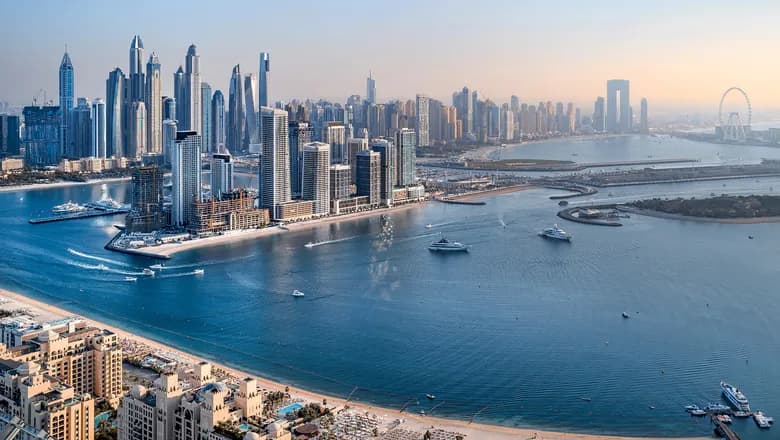
Dubai’s search landscape has changed again. For years, the winners were the brands that could rank on Google with strong keywords, clean technical SEO, and a decent backlink profile. That still matters, but it is no longer enough. In Dubai, where search behavior shifts between Arabic and English and where AI tools are increasingly shaping discovery, visibility now depends on whether your brand can be understood, trusted, and recommended across both languages and both search environments. The agencies already publishing on Dubai SEO trends, GEO, multilingual SEO, Arabic SEO, and AI Overviews are all pointing in the same direction, even if they are describing different parts of the problem.
That is why AI search optimization Dubai is the right conversation for 2026. It is not just about ranking. It is about becoming the answer in a market where buyers may search in English, ask follow-up questions in Arabic, compare options in AI tools, and then make a decision based on trust, clarity, and local relevance.
Why AI search optimization Dubai now depends on bilingual content
Dubai is not a single-language market with a few translated pages on top. It is a multilingual decision-making environment. A customer may search in English for “branding agency Dubai,” then switch to Arabic for reassurance, or ask an AI assistant for a shortlist of agencies that understand the UAE market, have local credibility, and speak to their industry properly. Google’s guidance on multilingual sites supports this reality by recommending separate language URLs and hreflang annotations, so search engines can understand which version belongs to which audience.
This matters because AI search does not reward keyword stuffing or shallow translation. It rewards pages that are structured, answer-first, and easy to quote. Google’s helpful content guidance reinforces that Search is built to surface people-first content, not pages designed mainly to chase traffic. Google also says structured data helps Search understand content, which is especially important when you want your pages to be interpreted correctly across language versions, service pages, FAQs, and local landing pages.
For Dubai businesses, the commercial implication is simple. If your English content is strong but your Arabic experience is weak, you are leaving trust on the table. If your Arabic content is literal translation instead of native localization, you are likely missing the way real buyers search. And if your site does not clearly signal who you serve, where you operate, and why you are credible in the UAE, AI systems have less reason to surface you.
What most Dubai agency content still misses
A quick look at the current agency landscape shows plenty of activity, but also plenty of repetition. Right Media is publishing on Dubai SEO trends for 2026, including AI search, voice search, multilingual SEO, and local SEO. Chain Reaction has a GEO guide. Carril has a UAE Arabic vs English SEO article. Web Glaze is focused on AI Overviews. Royex is writing about how AI browsers change discovery in Dubai and the UAE. The market clearly wants this conversation.
The gap is that most of these articles stop at explanation. They describe the trend, but they do not fully connect the dots for a business that actually needs leads. They rarely answer the more commercial questions: How should a bilingual Dubai brand structure its site? What should be in English and what should be written natively in Arabic? How should service pages, location pages, FAQs, and trust signals work together? What makes AI systems cite one brand over another in a crowded local market?
That is the opportunity. A high-value article should not only say that GEO matters. It should show how GEO, Arabic SEO, and local brand positioning work together in a market where credibility is built through both language and context.
The content gap: local-first positioning plus bilingual search
The strongest underserved angle is not just multilingual SEO. It is local-first bilingual SEO for AI search.
That means your content should do three things at once. First, it should prove that you understand the Dubai market. Second, it should speak naturally to both English and Arabic searchers. Third, it should create enough entity clarity for AI systems to confidently connect your brand to your service category, industry, and location.
This is especially relevant now because the Gulf is becoming more local-first in branding and retail. Vogue Business recently highlighted a broader shift across the UAE and Gulf toward homegrown brands, culturally relevant positioning, and identity-led consumer behavior. In that environment, generic global messaging feels weaker. Brands that sound local, look premium, and communicate with cultural precision have an advantage.
For FrameEight, this is a natural content lane because it sits at the intersection of strategy, branding, and visibility. A brand can no longer treat SEO as a technical task in one silo and branding as a separate creative exercise in another. In Dubai, those two disciplines are increasingly fused.
How to build an AI search-ready bilingual website in Dubai
Start with architecture, not copy.
Your site should not be one English page with a small Arabic toggle and machine-translated content hidden in the footer. A serious bilingual site should have a clear language structure, consistent navigation, separate URLs where needed, and localized content paths for each audience. Google’s documentation on multilingual sites is explicit on using dedicated language URLs and hreflang so Search can understand variations correctly.
From there, build pages around intent, not just services. A Dubai business should usually have a main service page in English and Arabic, plus supporting pages that answer the questions buyers actually ask. For example, instead of one generic “SEO services” page, a stronger structure would include pages or sections for local SEO, multilingual SEO, GEO, AI search optimization, and industry-specific landing pages such as real estate, hospitality, beauty, healthcare, or B2B.
Each page should open with a direct answer. AI systems and featured snippets both prefer content that gets to the point quickly. That means the first paragraph should say exactly what the page is about, who it is for, and why it matters in Dubai. After that, you can expand into process, proof, and examples.
Trust signals matter just as much as text. Add author bios, case studies, local office details, service area mentions, client logos, and proof of regional experience. In a market as competitive as Dubai, vague claims do not convert. Specificity does.
What to publish if you want AI search visibility
A strong content strategy for FrameEight should be built around topical authority. One article will not win the market. A connected content cluster will.
The core article should define the strategic framework. Supporting articles should then dig into the practical layers. For example, one piece could explain how Arabic keyword research differs from direct translation. Another could cover hreflang and multilingual site structure. Another could explore local SEO signals in Dubai, such as service-area pages, Google Business Profile optimization, reviews, and location consistency. A fourth could focus on how AI Overviews and generative search are changing the buyer journey.
This is where many agencies still underinvest. They talk about GEO as a concept, but not as a publishing system. AI search visibility grows when your site becomes the best organized source on a subject. That is not just an SEO play. It is an editorial discipline.
The role of branding in AI search optimization Dubai
One of the biggest mistakes businesses make is thinking AI search is only about content structure. It is also about brand perception.
If your brand feels generic, AI systems have less context to work with. If your design is inconsistent, your messaging is vague, and your site does not show a clear market position, you become harder to recommend. That is why branding and SEO should be treated as one growth system. In Dubai, especially for premium, luxury, real estate, lifestyle, and service-led businesses, the brand story is part of the search story.
This is also where local-first positioning becomes powerful. The more your brand reflects the market you serve, the more naturally it fits the way people search. A Dubai audience does not just want “best agency.” It wants the agency that understands the UAE audience, speaks the right language, respects the local tone, and looks credible enough to trust with a serious budget.
A practical 90-day approach for Dubai brands
The first 30 days should focus on audit and structure. Review your current language setup, service page hierarchy, local landing pages, content gaps, and conversion paths. Identify where English exists without Arabic support, where pages are duplicated without localization, and where search intent is not matched cleanly.
The next 30 days should focus on rewriting key pages for answer-first clarity. Build one flagship article on AI search optimization Dubai, then create supporting pages around bilingual SEO, GEO, and local-first branding. Make sure each page has a distinct search purpose.
The final 30 days should focus on reinforcement. Publish supporting content, improve internal linking, add structured data, refine metadata, and strengthen local proof across the site. Google’s structured data guidance supports this kind of machine-readable clarity, and the multilingual guidance supports explicit language targeting rather than vague assumptions.
At the same time, remember that Dubai’s publishing environment is more regulated than many markets. The UAE Media Council’s advertiser permit framework means promotional content in the country sits inside a more formal compliance environment, which makes authority, disclosure, and trust even more important. That is not a reason to slow down. It is a reason to publish more professionally.
Why this topic is commercially strong
This topic is valuable because it sits close to buying intent. A reader searching for AI search optimization Dubai, bilingual SEO Dubai, or GEO Dubai is usually not casually browsing. They are evaluating whether their brand is visible enough, credible enough, and future-ready enough to compete.
That makes the article useful both as an SEO asset and as a lead-generation asset. It can attract founders, CMOs, marketing managers, and business development teams who need real help, not theory.
For FrameEight, the article also strengthens positioning. It says, in effect: we do not just design and market brands. We help them become discoverable, understandable, and credible in a multilingual AI-driven market.
Conclusion
The future of search in Dubai is not English-only, and it is not keyword-only. It is bilingual, local, AI-assisted, and trust-led. Brands that treat Arabic as an afterthought will continue to underperform. Brands that translate instead of localize will sound generic. Brands that separate SEO from branding will struggle to build authority.
The opportunity is to build for the way Dubai actually works. That means one brand voice, two languages, clear structure, strong local signals, and content that AI systems can trust.
For a Dubai agency like FrameEight, that is not just an SEO trend. It is a positioning advantage.
FAQ section
What is AI search optimization in Dubai?
AI search optimization in Dubai is the process of making your brand visible in AI-driven search experiences such as Google AI Overviews and other generative search tools, while aligning content with Dubai’s bilingual audience.
Is bilingual SEO important in the UAE?
Yes. The UAE is a multilingual market, and Google recommends using separate language URLs and hreflang so search engines understand localized versions correctly.
What is the difference between SEO and GEO?
SEO focuses on ranking web pages in traditional search results. GEO focuses on making content easy for AI systems to understand, trust, and cite when they generate answers.
Should Dubai websites use Arabic translation or Arabic localization?
Localization is stronger. Direct translation often misses how Arabic users actually search and what makes content feel trustworthy in the UAE market.
Does FAQ schema still help SEO?
It can help structure content for search engines, but Google says FAQ rich results are now limited and not shown regularly for most sites. Use FAQ content primarily to answer user questions clearly.
Suggested featured image concept
A premium editorial-style image with a split-screen composition: one side shows English search results and a modern Dubai website interface, the other shows Arabic search results and RTL design. Overlay subtle AI search elements, a clean Dubai skyline, and FrameEight’s refined black, white, and red brand palette. The visual should feel premium, intelligent, and future-facing rather than overly tech-heavy.
Internal linking opportunities
Link this article to your SEO Services in Dubai page, AI Search / GEO Services page, Bilingual Website Design page, Brand Strategy page, Content Marketing page, and Performance Marketing page. Strong anchor text ideas include “SEO agency in Dubai,” “Arabic SEO services,” “AI search optimization,” “multilingual website strategy,” and “branding agency Dubai.”
Your next big project starts here
Start a projectTrusted by 100+ visionary brands
More from our blog
View AllMay 12, 2026
Why Most Dubai Businesses Fail at Digital Marketing in 2026
May 12, 2026
SEO Services in Dubai (2026 Guide): Costs, Strategy & How Businesses Actually Rank on Google
May 12, 2026
Web Design Cost in Dubai (2026 Guide): Pricing, Timelines & What Businesses Should Expect
May 10, 2026
PPC Management Cost in Dubai (2026 Guide): Pricing, Budgets & What Businesses Should Expect
May 10, 2026
Google Ads vs Meta Ads in Dubai: Which Platform Is Better for Your Business in 2026?